


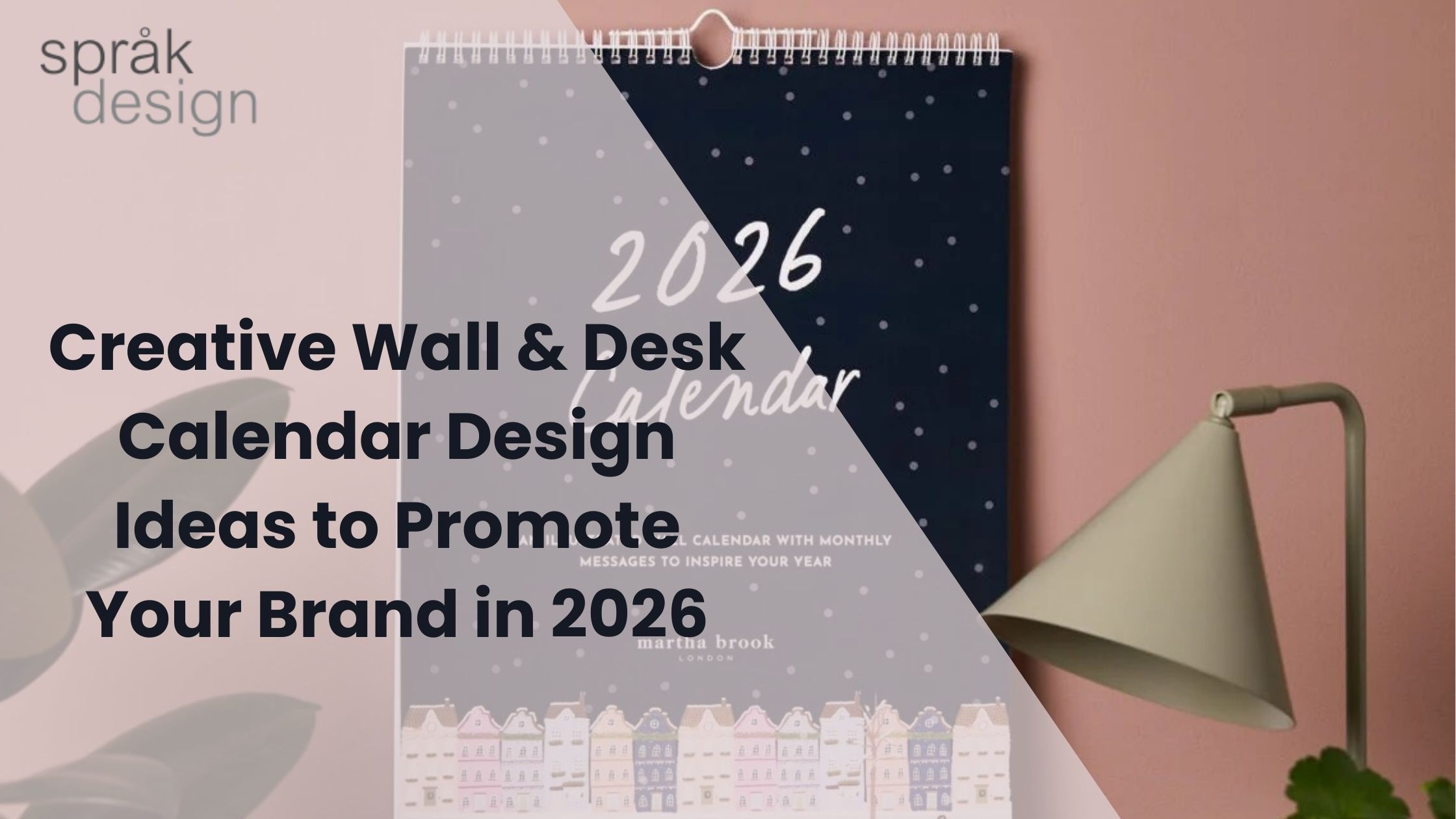
Creative Wall & Desk Calendar Design Ideas to Promote Your Brand in 2026


Just simply think about how many things you see at once and forget. A social media ad lasts a few seconds. A flyer gets tossed in the trash. But a calendar? It sits on a desk or hangs on a wall for an entire year. Every single day, someone looks at it.
That is why wall & desk calendar design is one of the smartest branding tools a business can use. It is not flashy. It is not trendy. It just works quietly, consistently, all year long.
In this guide, we will be sharing what makes a great promotional calendar, what design choices actually work, and what most businesses get completely wrong.
Why Promotional Calendars Still Outperform Most Marketing Materials
So, honestly most marketing materials have a short lifespan. Wall & desk calendar design solves that problem because the product is genuinely useful.
People keep calendars not because they like your brand, but because they need to track dates. Your brand just comes along for the ride every single day.
Here is what the numbers look like. A single promotional calendar distributed to 1,000 people can generate up to 1 million impressions over the course of a year. That is because every person who sees it on a wall or desk is an impression. Visitors, colleagues, family members they all see it.
Compare that to a digital ad that runs for a week and you start to see why businesses keep coming back to calendars year after year.
The Hidden Marketing Benefit Most Brands Miss
The biggest benefit of a well-designed calendar is not visibility it is trust. When you give someone something useful, they associate your brand with value. Over time, that association builds real loyalty.
A thoughtfully designed calendar communicates something ads cannot: that you care about the person receiving it. You put thought into it. You made something they would actually want to keep. That subtle message is worth more than most businesses realize.
What Makes Wall & Desk Calendar Design Actually Work for Branding
Not every calendar does its job well. Some end up in a drawer after January. Others get tossed because they are ugly or unhelpful. The ones that stick around for the full twelve months share a few common traits.
The 80/20 Rule for Promotional Calendars
The most important design principle for branded calendars is the 80/20 rule.
👉 About 80% of the calendar should serve the user.
👉 The other 20% can serve your brand.
The moment you flip that ratio and make it mostly promotional, the calendar loses its value to the recipient and ends up in the bin.
Your logo belongs in the footer, not the hero spot. Your tagline can live in a subtle spot on each page. Your contact details can be on the back. But front and center? That belongs to something the user finds genuinely useful or beautiful.
Consistency With Your Brand Identity
Good wall & desk calendar design uses your existing brand colors, fonts, and visual style. It should look like it belongs to your brand without being an advertisement. Think of it like branded stationery tasteful, consistent, and professional.
In case your website uses deep navy and white, carry that into the calendar. If your brand voice is warm and approachable, reflect that in any text or prompts you include. A calendar that feels disconnected from your brand does not reinforce recognition it creates confusion.
Top Wall Calendar Design Ideas for 2026
Wall calendars get seen by more people than desk calendars because they live in shared spaces offices, break rooms, kitchens, and hallways. That means the design needs to work at a glance and hold up to a full year of exposure.
#1 Product or Service Storytelling Across 12 Months
One of the most effective approaches to custom wall calendar design is telling a story across the year. Each month gets a different chapter. A product company might show the lifecycle of their product, from raw materials to finished items. A service company might walk through case studies or before-and-after results.
This works because it educates the viewer without feeling like a pitch. By December, the person has learned something real about your business and they did not even realize they were being marketed to.
#2 Team Spotlights That Build Real Connection
For service-based businesses, a team spotlight calendar is a thing that earns genuine trust. Each month features a team member their role, something personal, and maybe a tip related to your industry. It humanizes the brand in a way that no ad can.
Clients who see the faces behind the business feel a stronger connection. When they need your service again, they remember the people, not just the logo.
#3 Eco-Impact Trackers for Sustainability-Focused Brands
If your brand has sustainability commitments, a calendar is a perfect place to show real progress. Dedicate each month to a different metric trees planted, carbon offset, plastic avoided, or community hours donated. Use simple visuals like progress bars or illustrated milestones.
This approach works especially well for brands targeting conscious consumers. It shows action, not just messaging. And it gives the recipient something to feel good about displaying on their wall.
#4 Seasonal Campaign Integration
A smart custom wall calendar design syncs with your annual marketing plan. If you run a big promotion in Q1, the January page should have a subtle CTA or QR code. If you host events in spring, April and May can feature countdown prompts or registration details.
This turns the calendar from a passive brand touchpoint into an active part of your campaign calendar literally.
Desk Calendar Design Ideas That Work in Corporate and Home Office Settings
Desk calendars are different from wall versions in one important way: they are intimate. The person using it interacts with it multiple times a day flipping pages, jotting notes, glancing at dates. That close-up relationship means your design gets serious attention.
#1 Notepad Hybrids That Actually Get Used
The most popular desk calendar format in 2026 combines a monthly calendar with lined note space on each page. When someone can plan their day and jot down reminders on the same page, they use it constantly. And every time they use it, your brand is right there.
Add your tagline at the top of each sheet. Keep it short and consistent. Over three hundred days of daily use, that repeated exposure adds up significantly.
#2 Personalized B2B Editions for High-Value Clients
For businesses that want to impress key accounts, a personalized desk calendar is worth the extra investment. Imprint the client’s company name on the cover. Include their industry-relevant dates fiscal year markers, compliance deadlines, or sector-specific events.
This level of personalization signals that you see them as more than a generic customer. It builds goodwill and makes the calendar genuinely useful to them, which means it stays on the desk instead of going into a drawer.
#3 Interactive Monthly Challenges and Reward Systems
A growing trend in wall & desk calendar design for 2026 is embedding small interactive elements. Each month includes a challenge or prompt scan a QR code for a discount, complete a checklist for a reward, or answer a quiz question for a prize.
These micro-interactions extend the life of the calendar and drive traffic back to your website or store. They also give people a reason to talk about your calendar, which turns a passive gift into word-of-mouth marketing.
2026 Calendar Design Trends Worth Paying Attention To
Design trends for calendars are shifting noticeably this year. Here is what is working and what actually aligns with where buyer preferences are heading.
#1 Eco-Friendly Materials Are No Longer Optional
Sustainable printing has moved from a nice-to-have to an expectation, especially among younger professionals. Recycled paper stocks, vegetable-based inks, and FSC-certified materials are now standard requests in professional calendar design services.
Some brands are going further with seed-embedded covers that can be planted after the year ends. It is a memorable touch that reinforces environmental values and gives the recipient something to do with the calendar after December.
#2 QR Codes That Link to Real Value
QR codes on calendars are not new. But how they are being used in 2026 is smarter. Instead of linking to a homepage, they connect to something specific and valuable an AR product demo, an exclusive video, a members-only discount, or a downloadable resource.
When the QR code delivers something genuinely useful, people scan it. When it just goes to a homepage, they ignore it. The difference is in the intent behind the design.
#3 Minimalism With a Purposeful Focal Point
Clean, minimal wall & desk calendar design continues to dominate in professional settings. Clean grids, ample white space, and restrained color palettes make calendars easier to use and more pleasant to look at every day.
The key to making minimalism work is giving each page one strong focal point — a striking photo, a meaningful quote, or a compelling data visualization. One thing that earns attention, surrounded by breathing room.
#4 Wellness and Habit Tracking Elements
Wellness integration is one of the fastest-growing trends in desk calendar design right now. Monthly habit trackers, gratitude prompts, and goal-setting sections are being added to calendars by brands across industries not just wellness companies.
Why? Apparently, because people genuinely use these features. A calendar with a daily mood tracker gets opened more often than one without. And every time it gets opened, your brand is in view.
How to Choose Between Wall and Desk Calendar Formats
The format you choose should match where your audience spends most of their time and how you want your brand to be seen. Here is a simple way to think about it.
#1 When a Wall Calendar Makes More Sense
Wall calendars are better for brands that want broad visibility. If your customers have shared offices, common areas, or home kitchens where a calendar would be seen by multiple people daily, a wall version gives you more impressions per unit.
Custom wall calendar design works especially well when you have strong visual content product photography, illustrated artwork, or bold infographics that deserve a large format to make an impact.
#2 When a Desk Calendar Is the Smarter Choice
Desk calendars are better for brands that want deep engagement with a specific individual. They are ideal for B2B relationships, professional services, or any situation where you want the recipient to interact with your brand daily rather than just glance at it.
For high-value client gifts, a custom wall calendar design might be the right choice for shared office spaces, while a personalized desk version goes to the decision-maker at their workstation.
Materials and Printing: What to Specify for a Quality Result
The physical quality of a calendar says as much about your brand as the design does. A limp, thin calendar that curls at the edges sends the wrong message. Here is what to look for when working with professional calendar design services.
#1 Paper Stock and Finish Options
For wall calendars, 14pt gloss gives you vibrant color reproduction that holds up over time. Matte finishes work better for minimalist designs and reduce glare in well-lit spaces. Linen textures add a tactile premium quality that recipients notice when they touch it.
For desk calendars, prioritize thick paper stock at least 100lb text weight so pages do not show through to the next month and feel substantial when writing on them. Chipboard backing makes the whole product feel sturdy and professional.
#2 Binding Choices That Affect Usability
Spiral binding is the standard for wall calendars because it lets pages lay flat and flip cleanly. Wire-o binding gives a cleaner, more premium look for desk versions. Saddle-stitch binding works for thinner, more affordable runs.
One thing worth knowing: the binding affects how your calendar is displayed. Spiral bound wall calendars need a hook or nail hole at the top. Wire-o desk calendars need an easel back or stand to sit upright. Make sure your printing specs account for how the calendar will actually be used.
#3 Printing Best Practices to Avoid Costly Mistakes
Always submit artwork at 300 DPI. Anything lower and your images will look soft or pixelated in print, which is noticeable and damaging to your brand image. Include bleed margins typically 0.125 inches on all sides so color and images extend to the edge without white gaps.
Order a physical proof before your full print run. Colors on screens and colors on paper behave differently. A proof lets you catch issues before committing to 500 or 1,000 units. This is a step that professional calendar design services will always recommend.
How to Distribute Calendars for Maximum Brand Impact
A well-designed calendar only works if it reaches the right people and actually ends up somewhere visible. Distribution strategy is as important as design.
👉 When to Distribute for Best Results
The ideal distribution window is October through December. By the time January rolls around, you want your calendar already sitting on desks and hanging on walls. If you distribute in January, you are competing with calendars people already have. Early movers win the real estate.
👉 The Best Distribution Channels for Promotional Calendars
The most effective channels depend on your audience. For B2B brands, including a calendar in your client appreciation mailer or handing it out at trade shows works extremely well. For consumer brands, bundling it with a holiday order or sending it to your top loyalty customers creates a strong impression.
- Trade show booths immediate, face-to-face impact
- Client appreciation mailers high perceived value
- Bundled with product orders during Q4
- Employee gifts that travel home and get displayed
- VIP customer packages for your highest-spending segment
Segment your distribution. A luxury edition with premium materials goes to your top-tier clients. A simpler version with the same core design goes to a broader list. Different audiences, appropriately matched products.
What to Look for in Professional Calendar Design Services
If you are outsourcing your calendar design, choosing the right partner makes the difference between a calendar that gets kept and one that gets tossed. Here is what actually matters.
#1 Portfolio and Industry Experience
Look at real samples, not just mockups on screens. Ask to see printed examples or high-resolution proofs from past projects. A designer or agency with experience in promotional printing will understand bleed, stock, and binding not just visual aesthetics.
Check if they have worked with brands in your industry. A studio that has produced calendars for professional services firms will approach a B2B brief differently than one that mainly does consumer lifestyle work.
#2 What a Good Brief to a Design Partner Should Include
When you approach professional calendar design services, come prepared with the following:
- Your primary brand colors, fonts, and logo files
- The calendar format you want wall, desk, or both
- Your target audience and where the calendar will be displayed
- Any specific content you want featured products, team, events, milestones
- Your print quantity and target distribution date
- Any sustainability requirements for materials or inks
The clearer your brief, the better the output. Vague briefs lead to generic results. Specific briefs lead to calendars that actually represent your brand well.
#3 Platforms to Evaluate Designers and Agencies
Bedance and Dribble are two of the best places to review design portfolios before reaching out to a studio. Search for calendar design, promotional print, or branded stationery to find relevant work. Look for consistency across multiple projects that is usually a better indicator of reliability than one standout piece.
How to Measure Whether Your Calendar Campaign Actually Worked
A lot of businesses distribute calendars and then have no idea whether they moved the needle. Here is a simple way to track the impact of your wall & desk calendar design campaign.
#1 Using Unique Promo Codes and QR Tracking
Include a unique promo code or a tracked QR code on the calendar. Every time someone uses that code or scans that link, you know the calendar drove that action. This gives you hard data on how many responses the calendar generated.
Aim for a redemption rate of 15 to 20% as a starting benchmark. Even a 10% redemption rate on a well-targeted list can represent significant revenue when you factor in the cost per unit — which for bulk runs of 500 or more often drops below two dollars per calendar.
#2 Surveying Recipients About Display Habits
Ask your customers directly. A short survey sent in January “Did you receive our calendar? Is it displayed?” gives you useful data. If 80% of recipients say they displayed it, you have strong evidence of sustained brand exposure. That kind of keep rate is what makes calendars one of the best long-term ROI tools in promotional marketing.
What Comes Next: Future-Proofing Your 2026 Calendar Strategy
Promotional calendars are evolving. The core format stays the same, but the possibilities around it keep expanding. Here is where things are heading.
NFC chips embedded in calendar covers let people tap their phone to access content — no QR scanning required. Scented inks are being used by consumer brands to trigger sensory memory. Co-branded editions with complementary businesses or local artists create limited-edition appeal that drives social sharing.
The brands that treat their calendar as a genuine creative project not just a branded giveaway are the ones getting talked about. And in a world where attention is expensive, being talked about is valuable.
Share Your Wall & Desk Calendar Design for Brand Promotion Requirements With Team Spark Design
Calendars work because they are useful. They stay in front of people because people need them. And when your brand is attached to something someone needs, you stay top of mind without spending a single dollar on ads after the initial print run.
Good wall & desk calendar design is not about putting your logo everywhere. It is about creating something worth keeping. When you get that right, the brand exposure follows naturally for twelve months straight.
If you are planning a calendar campaign for 2026 and want help getting the design right, working with professional calendar design services that understand both print and brand strategy will save you time, money, and the cost of a misprinted run. Get in touch and we can walk you through what would work best for your brand.
