


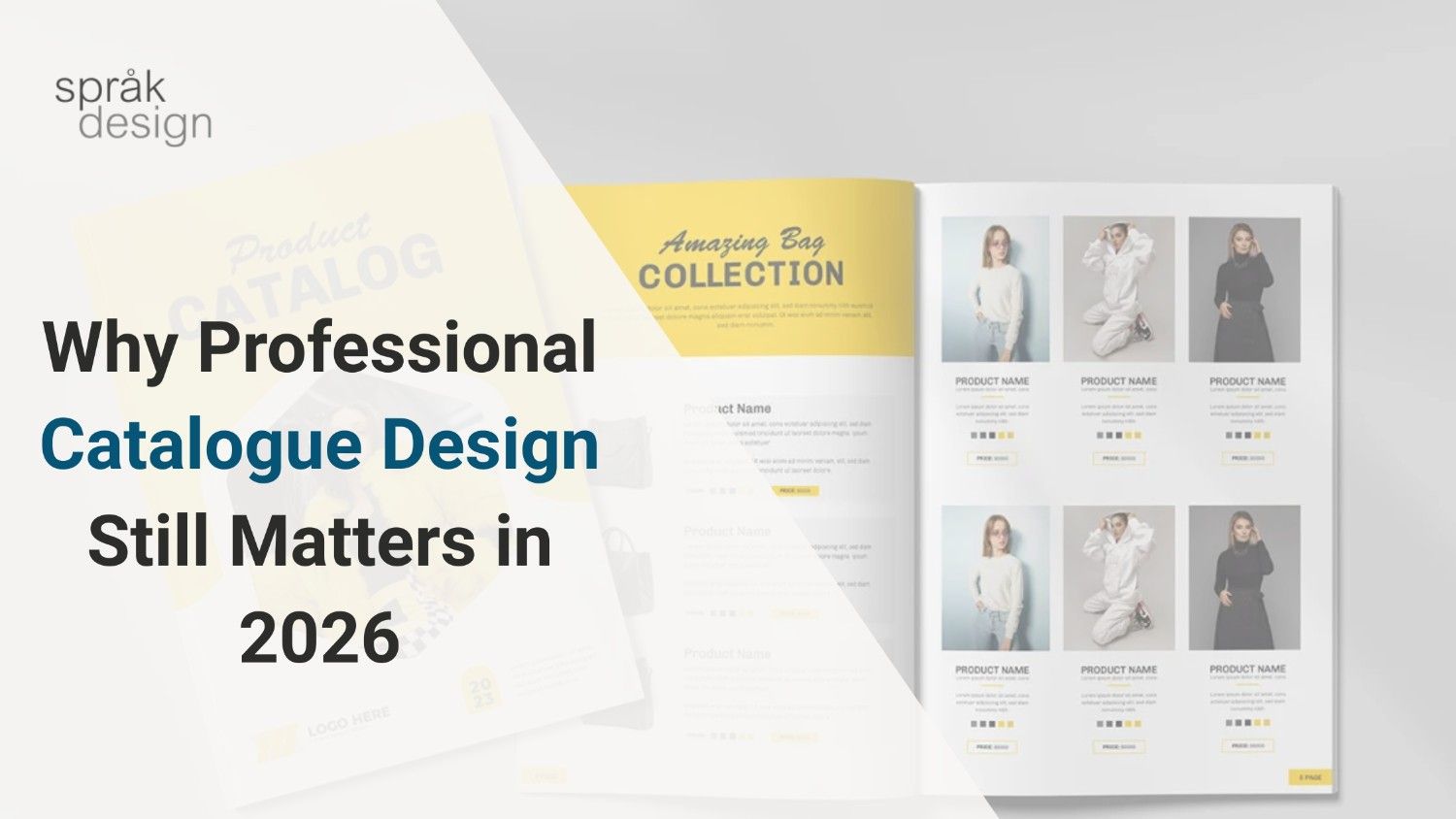
Why Professional Catalogue Design Still Matters in 2026


In a world dominated by short-form videos, AI-generated content, and instant online shopping, you might assume that traditional catalogues are outdated. But the truth is quite the opposite. In 2026, professional catalogue design has evolved into a powerful hybrid marketing tool that blends visual storytelling, brand authority, and measurable sales impact.
Businesses that invest in high-quality catalogue design are not just printing product lists — they are creating immersive brand experiences. Whether digital or print, catalogues continue to drive conversions, increase trust, and position brands as industry leaders.
Let’s explore why catalogue design remains relevant, profitable, and essential in 2026 — and why cutting corners here can cost your brand credibility and sales.
The Evolution of Catalogue Design
Catalogue design has changed dramatically over the last decade. Gone are the days of cluttered pages and generic layouts. Today’s catalogues are:
- Strategically structured
- Brand-focused
- Visually immersive
- Optimized for both print and digital
- Integrated with online sales funnels
Modern catalogues are interactive, data-driven, and carefully curated to guide readers toward specific actions. Professional designers now combine UX principles, brand psychology, typography strategy, and visual hierarchy to create layouts that don’t just look beautiful — they convert.
In 2026, a catalogue is not just a sales booklet. It’s a high-impact marketing asset.
First Impressions Still Matter — Even More Than Before
In a saturated market, attention is currency. When someone opens your catalogue — whether online or in print — you have seconds to capture their interest.
A professionally designed catalogue ensures:
- Clear visual flow
- Strong typography
- Balanced white space
- High-quality imagery
- Consistent branding
Poor design instantly reduces perceived value. On the other hand, a polished catalogue increases trust and positions your business as credible and established.
Remember: people often judge product quality based on presentation. If your catalogue looks premium, your products feel premium.
Print Is Not Dead — It’s Strategic
While digital marketing dominates, print catalogues have experienced a resurgence. Why? Because physical materials cut through digital noise.
In 2026, consumers are overwhelmed with ads. A printed catalogue offers:
- A tangible, tactile experience
- Longer attention spans
- Higher recall value
- Stronger emotional connection
Studies consistently show that print materials are remembered longer than digital ads. A well-designed catalogue on high-quality paper feels intentional, curated, and trustworthy.
Brands now use print catalogues as strategic touchpoints — especially in luxury retail, real estate, furniture, fashion, and B2B industries.
Digital Catalogues Drive Measurable Results
The modern digital catalogue is not a static PDF. It’s interactive, clickable, and integrated with eCommerce platforms.
Professional digital catalogue design includes:
- Click-to-buy functionality
- Embedded videos
- Smart navigation
- Search filters
- Lead capture forms
- Analytics tracking
This transforms catalogues into conversion-driven sales tools. You can track user behavior, measure engagement, and optimize layouts based on data.
In 2026, catalogue design merges creative storytelling with performance marketing.
Brand Identity Becomes Stronger Through Consistency
Consistency builds trust. When your catalogue aligns perfectly with your website, packaging, and social media visuals, it reinforces brand recognition.
Professional catalogue design ensures:
- Cohesive color palettes
- Aligned typography systems
- Consistent image treatment
- Clear messaging tone
- Defined layout grids
Every page becomes a reflection of your brand personality. Whether your brand is minimalist, bold, elegant, or innovative, your catalogue must visually communicate that identity.
Strong brand presentation leads to stronger brand recall.
Catalogue Design Influences Buying Psychology
A well-designed catalogue is not random. It’s structured around buyer psychology.
Professional designers understand:
- Eye movement patterns
- Decision-making triggers
- Emotional storytelling
- Pricing psychology
- Visual hierarchy
For example:
- Premium products are positioned strategically.
- High-margin items are highlighted subtly.
- Bundles are visually grouped.
- White space is used to elevate value perception.
Every layout choice influences purchasing behavior. That’s the difference between a DIY template and a professionally crafted catalogue.
B2B Markets Still Rely on Catalogues
In many industries — manufacturing, wholesale, construction, healthcare, and technology — catalogues remain essential sales tools.
Sales representatives often rely on professional catalogues to:
- Present product specifications
- Explain technical features
- Showcase case studies
- Share pricing structures
- Demonstrate expertise
A well-organized catalogue simplifies complex information and builds confidence among business buyers.
In B2B environments, professionalism equals trust — and trust equals contracts.
Catalogue Design Supports Omnichannel Marketing
Modern marketing is omnichannel. Customers interact with brands across multiple platforms before making a decision.
A professionally designed catalogue can be repurposed into:
- Social media carousels
- Website landing pages
- Email campaigns
- Digital ads
- Trade show materials
- Sales presentations
Instead of creating disconnected marketing pieces, businesses use catalogues as central content hubs.
This increases efficiency and ensures consistent messaging across all channels.
Storytelling Sells More Than Listings
The biggest shift in catalogue design by 2026 is the move from product listing to storytelling.
Today’s catalogues include:
- Lifestyle photography
- Brand narratives
- Customer testimonials
- Behind-the-scenes insights
- Usage inspiration
Instead of saying “Here are our products,” modern catalogues say, “Here’s how our products improve your life.”
This emotional engagement drives higher conversions and customer loyalty.
Professional Design Saves Money in the Long Run
Some businesses hesitate to invest in professional catalogue designers because of cost. But poor design can result in:
- Lower conversion rates
- Reduced credibility
- Reprints due to errors
- Missed sales opportunities
- Inconsistent branding
Professional designers plan layout structure, proof carefully, and optimize printing specifications. This prevents expensive mistakes.
A well-designed catalogue is not an expense — it’s a revenue-generating asset.
Sustainability and Smart Printing in 2026
Sustainability matters more than ever. Professional catalogue design now incorporates:
- Eco-friendly paper choices
- Efficient ink usage
- Optimized page counts
- Sustainable packaging options
Designers also plan layouts to reduce waste while maintaining aesthetic appeal.
Brands that align catalogue production with environmental responsibility strengthen their reputation and appeal to conscious consumers.
Custom Design Outperforms Templates
Templates may seem convenient, but they limit brand uniqueness.
Professional catalogue design offers:
- Custom layout grids
- Brand-specific typography
- Unique visual storytelling
- Tailored user journeys
- Strategic content placement
In competitive markets, differentiation is everything. A custom-designed catalogue sets you apart instantly.
Templates blend in. Custom design stands out.
AI Tools Cannot Replace Human Design Strategy
In 2026, AI tools assist designers — but they do not replace strategic creativity.
AI can generate layouts, suggest color schemes, or automate resizing. However, it cannot:
- Understand nuanced brand emotion
- Align design with long-term business goals
- Craft persuasive storytelling flow
- Balance creativity with strategy
Professional catalogue designers blend human insight with modern tools, creating results that feel intentional and impactful.
Also Read: Innovative Ideas for Catalog Design
Luxury Brands Depend on High-End Catalogue Presentation
Luxury brands continue to use catalogues as premium brand statements.
High-end catalogue design includes:
- Editorial-style layouts
- Artistic photography
- Minimalist composition
- Premium finishes
- Thoughtful typography
These catalogues are not just marketing tools — they are brand artifacts.
When customers experience luxury presentation, they justify premium pricing more easily.
Small Businesses Benefit Just as Much
Catalogue design is not only for large corporations. Small and mid-sized businesses benefit significantly from professional presentation.
A strong catalogue can:
- Level the playing field
- Build credibility quickly
- Improve sales meeting outcomes
- Support product launches
- Enhance retail partnerships
Even startups can use catalogues to showcase their professionalism and gain trust from distributors and customers.
SEO and Catalogue Integration
Digital catalogues also contribute to search visibility.
When properly optimized, catalogue content can:
- Rank for product keywords
- Improve on-site engagement
- Reduce bounce rates
- Increase time on page
- Generate backlinks
By structuring catalogue pages strategically and integrating them into your website architecture, you transform them into powerful SEO assets.
Catalogue design in 2026 is not isolated from digital strategy — it’s integrated into it.
The Competitive Advantage of Professional Catalogue Design
At the core of it all, professional catalogue design gives businesses an edge.
It:
- Enhances credibility
- Strengthens brand identity
- Increases perceived value
- Improves customer experience
- Drives measurable conversions
- Supports long-term growth
In competitive industries, small details make big differences. Presentation is no longer optional — it is strategic.
Conclusion
In 2026, professional catalogue design is far from outdated. It has evolved into a sophisticated marketing tool that blends visual storytelling, psychology, branding, and measurable performance.
Whether print or digital, catalogues continue to influence buying decisions, build brand authority, and support omnichannel marketing strategies. Businesses that invest in high-quality, professionally designed catalogues company gain credibility, improve conversions, and differentiate themselves in crowded markets.
In a fast-moving digital era, thoughtful design still wins. And a well-crafted catalogue remains one of the most powerful ways to present your brand with clarity, confidence, and impact.
