


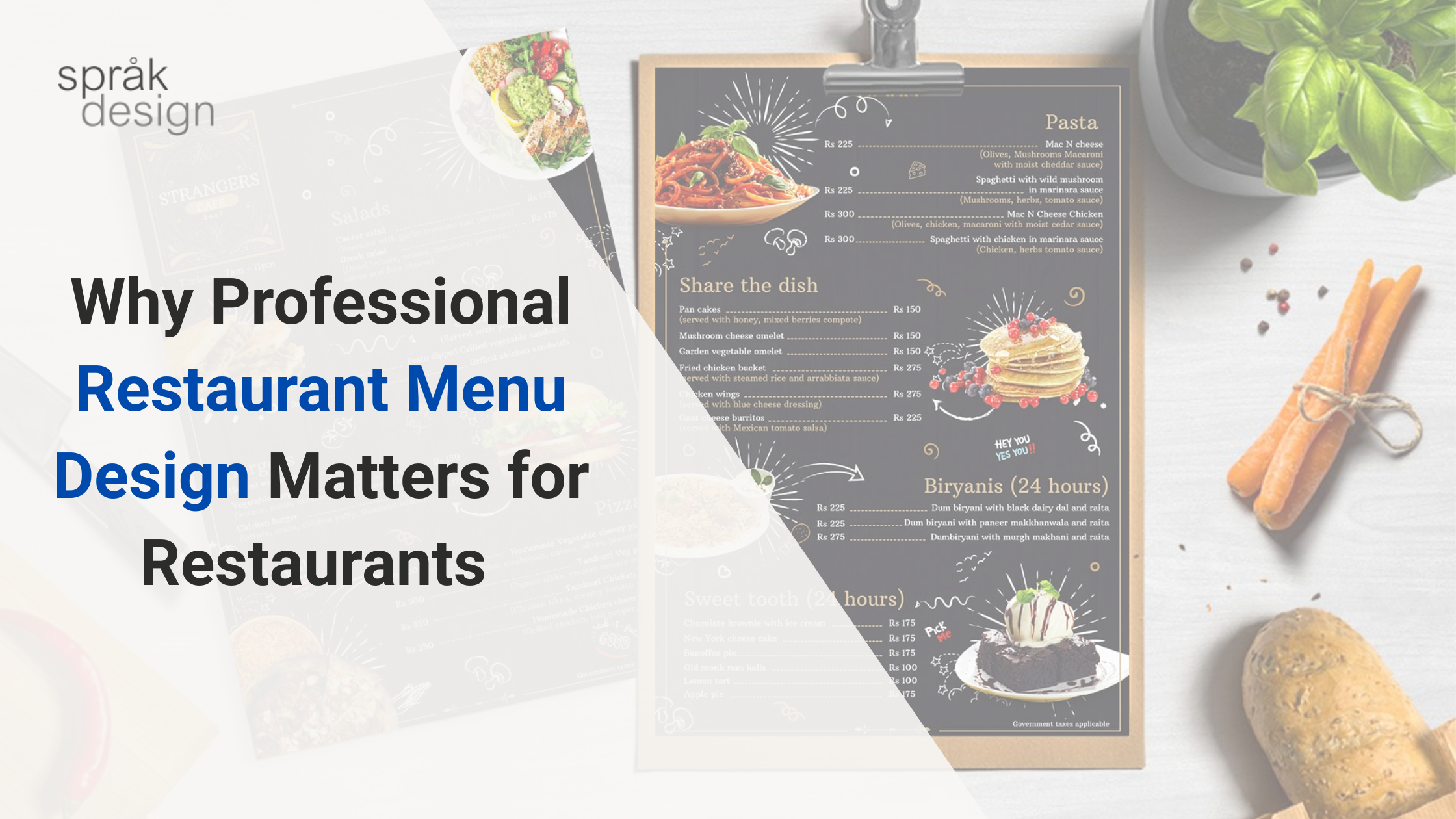
Why Professional Restaurant Menu Design Matters for Restaurants


In today’s highly competitive food and hospitality industry, great food alone is no longer enough to guarantee success. Restaurants must capture attention, communicate value, and influence customer decisions within seconds of a guest sitting down. One of the most powerful yet often underestimated tools to achieve this is professional restaurant menu design.
Your menu is not just a list of dishes and prices—it is a silent salesperson, a brand storyteller, and a strategic marketing asset. When done right, restaurant menu design can increase average order value, guide customers toward high-margin items, strengthen brand identity, and elevate the overall dining experience.
In this in-depth guide, we’ll explore why professional menu design matters, how it impacts customer psychology, branding, and revenue, and why investing in expert menu design is one of the smartest decisions a restaurant owner can make.
Understanding Restaurant Menu Design Beyond Aesthetics
Many restaurant owners assume menu design is purely about making the menu “look good.” In reality, menu design is a blend of strategy, psychology, branding, and usability.
Professional restaurant menu design focuses on:
- How customers read and scan menus
- How layout influences ordering behavior
- How visuals communicate quality and pricing perception
- How typography affects readability and mood
A well-designed menu doesn’t just display food—it guides choices, subtly encouraging customers toward profitable and popular items.
For more insights into user behavior and design psychology, you can check this article on how design affects decision making.
The Menu as a Powerful Marketing Tool
Your menu is often the first and most consistent piece of marketing your restaurant produces. Unlike ads that people may ignore, menus demand attention because customers need them to order.
A professionally designed menu:
- Reinforces your restaurant’s brand personality
- Creates trust and credibility
- Communicates value without saying a word
- Differentiates you from competitors
When customers perceive your menu as thoughtful and polished, they subconsciously assume the same level of care applies to your food and service.
First Impressions Matter More Than Ever
Studies show that customers form opinions about a restaurant within seconds. The menu plays a critical role in shaping that first impression.
A cluttered, poorly designed menu can signal:
- Disorganization
- Low quality
- Lack of professionalism
On the other hand, a clean, strategic restaurant menu design instantly communicates:
- Confidence
- Attention to detail
- Premium or casual positioning (depending on brand)
First impressions are hard to reverse. A professional menu helps ensure that the first impression works in your favor.
How Professional Menu Design Influences Customer Psychology
Menu psychology is a key reason why professional design matters. Designers use proven behavioral principles to influence ordering decisions.
Strategic Item Placement
Customers don’t read menus line by line. Their eyes naturally gravitate toward certain areas:
- Top-right corner
- Center sections
- Highlighted boxes or callouts
Professional menu design places high-margin and signature items in these “sweet spots” to maximize profitability.
Pricing Psychology
Professional menus avoid currency symbols or excessive decimals, which can trigger price sensitivity. Instead, prices are integrated seamlessly to keep focus on the food, not the cost.
Visual Anchoring
Designers use contrast, spacing, and typography to subtly make some items stand out—without looking like aggressive sales tactics.
Boosting Average Order Value Through Smart Menu Design
One of the biggest benefits of professional restaurant menu design is its ability to increase average order value (AOV).
Here’s how it works:
- Highlighting premium dishes encourages upgrades
- Strategic descriptions make items sound more appealing
- Grouping add-ons and sides increases upsells
- Featuring chef’s specials builds curiosity
Without saying “buy this,” the menu gently nudges customers toward higher-value choices.
Menu Descriptions That Sell Without Sounding Salesy
Words matter just as much as visuals. Professionally written menu descriptions are crafted to trigger emotions and appetite.
Effective descriptions:
- Use sensory language (crispy, slow-roasted, velvety)
- Highlight unique ingredients or preparation methods
- Avoid overly long or confusing explanations
- Match the brand voice (casual, elegant, modern)
When menu design and copy work together, the result is higher engagement and better conversions.
Brand Identity and Consistency in Menu Design
Your menu should feel like an extension of your restaurant’s identity.
Professional restaurant menu design ensures consistency across:
- Logo usage
- Color palette
- Typography
- Tone of voice
- Visual style
This consistency builds brand recognition and trust. Whether it’s a fine-dining restaurant, café, food truck, or casual diner, your menu should instantly reflect who you are.
Digital Menus and Modern Restaurant Experiences
Today’s menu design goes beyond printed pages. Professional designers consider how menus perform across different formats.
Digital Menu Design
- QR code menus
- Tablet-based menus
- Online ordering platforms
Print Menu Design
- Dine-in menus
- Takeout menus
- Table tents and inserts
A professional approach ensures your menu design remains readable, attractive, and effective on all devices and formats.
Accessibility and Readability Matter
A common mistake in DIY menus is sacrificing readability for style.
Professional menu design prioritizes:
- Clear font choices
- Proper spacing
- Logical content hierarchy
- Color contrast for easy reading
This ensures that menus are accessible to all customers, including older guests or those with visual impairments—improving overall satisfaction.
Menu Design and Pricing Perception
Design strongly influences how customers perceive price.
For example:
- Minimalist menus often feel more premium
- Clean layouts suggest higher quality
- Overcrowded menus can feel cheap or overwhelming
Professional restaurant menu design aligns pricing perception with your business goals, whether you’re positioning yourself as affordable, premium, or somewhere in between.
Reducing Decision Fatigue for Customers
Too many choices can overwhelm customers and slow down ordering.
Professional menu designers help:
- Organize items into clear categories
- Reduce unnecessary options
- Highlight best-sellers
- Create a smooth decision-making flow
This leads to faster ordering, happier customers, and more efficient table turnover.
Seasonal Updates and Menu Engineering
Menus shouldn’t stay static. Professional designers think long-term.
They design menus that:
- Are easy to update seasonally
- Allow quick swaps for pricing or availability
- Support menu engineering strategies
This flexibility helps restaurants stay relevant and competitive throughout the year.
Why DIY Menu Design Often Hurts More Than It Helps
Many restaurants attempt to design menus themselves using templates or basic tools. While this may save money upfront, it often costs more in the long run.
Common DIY menu problems:
- Poor readability
- Inconsistent branding
- No strategic layout
- Missed revenue opportunities
Professional menu design is an investment that pays for itself through improved customer experience and higher sales.
Competitive Advantage in a Crowded Market
In areas where customers have endless dining options, details matter.
A professionally designed menu:
- Makes your restaurant memorable
- Creates a sense of credibility
- Helps you stand out from competitors
When two restaurants offer similar food and prices, the one with better presentation often wins.
The Role of Menu Design in Online Discovery
Menus are frequently viewed online before customers ever visit.
Professional restaurant menu design ensures:
- Menus are easy to scan on mobile
- Images and layout look polished on websites
- Branding is consistent across platforms
This improves first impressions and increases the likelihood of diners choosing your restaurant.
Measuring the ROI of Professional Menu Design
Unlike traditional advertising, menu design impacts every customer interaction.
Benefits include:
- Increased average order value
- Better customer satisfaction
- Improved brand perception
- Higher repeat visits
When viewed over time, professional restaurant menu design delivers one of the highest returns on investment in the hospitality industry.
Choosing the Right Menu Design Partner
Not all designers understand restaurants. A professional menu designer should:
- Understand hospitality trends
- Apply menu psychology principles
- Balance creativity with functionality
- Align design with your business goals
The right partner doesn’t just design a menu—they help shape your restaurant’s success.
Future Trends in Restaurant Menu Design
As dining habits evolve, so does menu design.
Emerging trends include:
- Minimalist layouts
- Sustainable materials
- Interactive digital menus
- Data-driven menu optimization
Professional designers stay ahead of these trends, ensuring your restaurant remains modern and appealing.
Conclusion: Why Professional Restaurant Menu Design Is Essential
Your menu is far more than a list of dishes—it’s a strategic business tool that influences perception, behavior, and revenue. Professional restaurant menu design combines psychology, branding, and functionality to create a seamless dining experience that benefits both customers and restaurant owners.
By investing in expert menu design, restaurants can increase sales, strengthen brand identity, stand out in competitive markets, and leave lasting impressions on guests. In an industry where every detail counts, a professionally designed menu isn’t a luxury—it’s a necessity.
If you want your restaurant to grow, thrive, and compete at a higher level, it all starts with a menu designed to do more than just inform—it should persuade, inspire, and perform.
Author

Frequently Asked Questions
Restaurant menu design is the strategic process of organizing food items, prices, descriptions, and visuals in a way that enhances readability, reflects brand identity, and influences customer ordering behavior. It goes beyond aesthetics and focuses on psychology, usability, and profitability.
Professional menu design helps restaurants increase sales, improve customer experience, and strengthen brand perception. A well-designed menu guides customers toward high-margin items, reduces decision fatigue, and creates a positive first impression.
Menu design influences how customers scan, interpret, and choose items. Strategic placement, pricing layout, typography, and descriptions subtly encourage guests to select specific dishes, often increasing average order value.
Most restaurants should review their menu design at least once a year or whenever there are major changes in pricing, offerings, branding, or customer behavior. Seasonal updates are also recommended to keep the menu fresh and relevant.
Menu design visually communicates a restaurant’s personality through colors, typography, tone, and layout. Consistent menu design reinforces brand identity and helps build customer trust and recognition.