

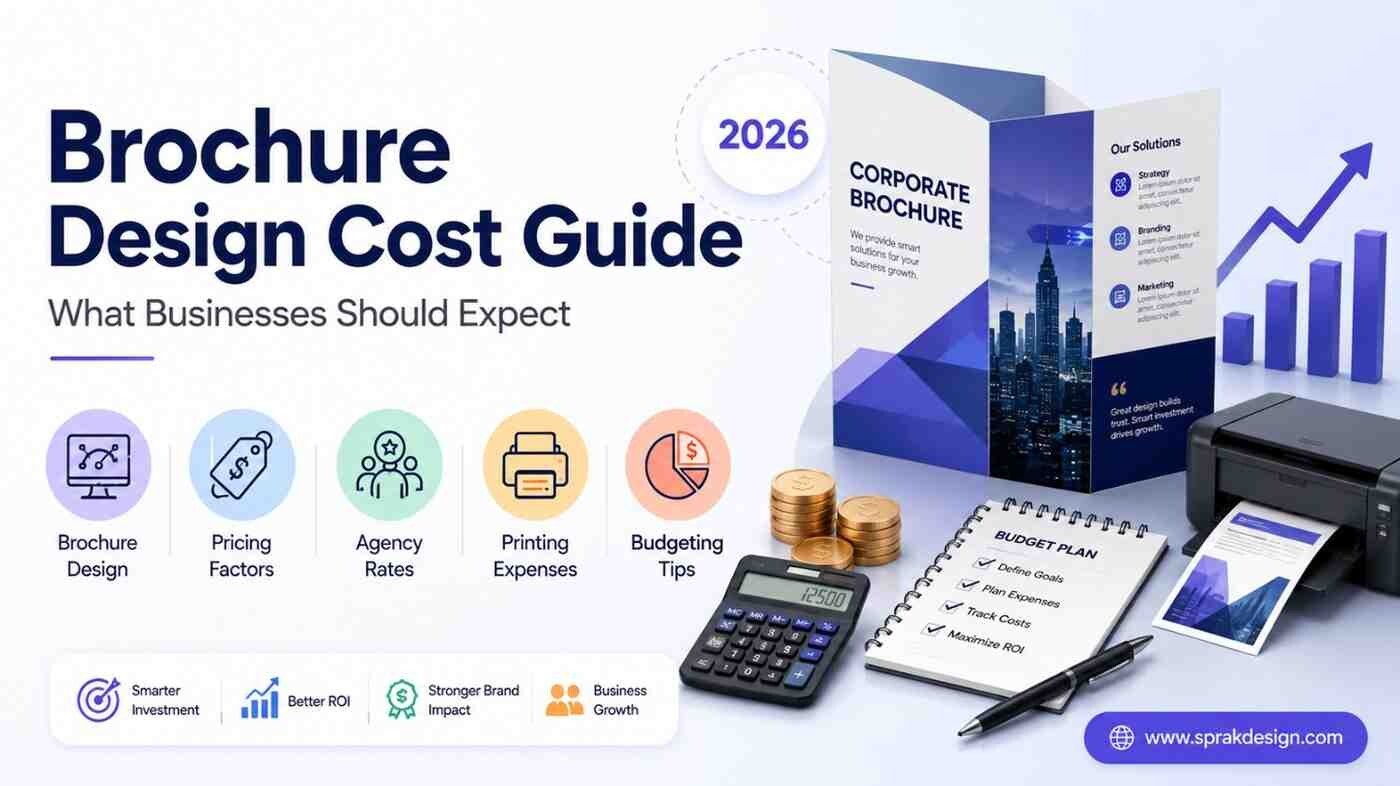
Brochure Design Cost Guide: What Businesses Should Expect in 2026


Key Takeaways
- Brochure pricing in 2026 depends on design complexity, page count, customization level, and turnaround time.
- Professional brochures continue to generate value as tangible marketing assets that support sales and brand credibility.
- Businesses should evaluate both design and production expenses when estimating total project costs.
Working with experienced designers often delivers stronger ROI than relying solely on generic templates.
Introduction
Creating a brochure may seem like a straightforward project, but businesses often discover that pricing can vary dramatically depending on design complexity, content requirements, branding needs, and printing specifications.
As companies continue investing in both digital and offline marketing strategies, understanding the brochure design cost landscape in 2026 has become essential for planning campaigns and allocating resources effectively.
Whether you’re a startup preparing your first marketing collateral or an established enterprise refreshing your brand materials, this guide breaks down the factors that influence brochure pricing and how to budget wisely.
Why Brochures Still Matter in 2026
Despite the rise of digital marketing, brochures remain among the most trusted print marketing assets. Research consistently shows that physical marketing materials create stronger brand recall because they engage multiple senses and remain accessible long after initial exposure. Printed materials continue to play a significant role in trade shows, sales meetings, retail environments, hospitality businesses, healthcare organisations, and real estate marketing.
A well-designed brochure doesn’t simply present information. It tells a story, guides readers through a buying journey, and reinforces brand professionalism. This is why businesses continue to invest in high-quality design rather than treating brochures as an afterthought.
As a result, understanding the true brochure design cost helps companies make informed decisions rather than focusing solely on the lowest quote.
Average Brochure Design Cost in 2026
The typical brochure design cost in 2026 ranges from $150 to $3,000+, depending on project scope.
| Project Type | Estimated Cost Range |
|---|---|
| Template-based brochure | $150 – $400 |
| Basic custom brochure | $400 – $800 |
| Professional business brochure | $800 – $1,500 |
| Premium corporate brochure | $1,500 – $3,000+ |
| Multi-page annual or product catalog | $3,000 – $10,000+ |
The final brochure design cost depends on several variables beyond layout creation. Content writing, photography, custom illustrations, branding work, and revisions can all influence the final investment.
Factors That Influence Brochure Pricing
1. Number of Pages and Panels
A simple tri-fold brochure requires significantly less work than a 24-page product catalog.
Brochure Designers must:
- Organize content carefully
- Establish visual hierarchy
- Maintain consistency throughout the document
- Proofread content
- Execute layouts effectively
Naturally, larger projects result in a higher brochure design cost because of the increased production time.
2. Design Complexity
Not all brochures are created equally. A straightforward informational brochure with standard imagery costs less than a highly customized piece featuring:
- Custom illustrations
- Infographics
- Data visualization
- Advanced typography
- Premium layouts
- Interactive QR integrations
The more unique the creative direction, the greater the required expertise and effort.
3. Content Development
Many businesses underestimate how much time goes into content preparation.
If copywriting services are needed, costs increase accordingly. Professional copywriters help ensure that brochure messaging remains concise, persuasive, and aligned with business objectives.
When budgeting for brochure design cost, remember that compelling content often contributes as much to performance as visual design.
4. Brand Alignment Requirements
Organizations with strict brand guidelines typically require more detailed design work.
Designers must carefully apply:
- Brand colors
- Typography systems
- Logo standards
- Visual consistency rules
- Accessibility requirements
While these standards improve brand recognition, they can also increase project timelines and pricing.
5. Revisions and Feedback Cycles
Most designers include a specific number of revision rounds.
Projects involving multiple stakeholders frequently experience longer approval processes. Every additional revision cycle requires time, coordination, and implementation.
This is one reason why design agency pricing often includes clearly defined revision limits within project proposals.
Freelancers vs Agencies: What Should You Choose?
Freelancers
Advantages:
- Lower upfront pricing
- Flexible communication
- Suitable for small projects
Challenges:
- Limited service scope
- Variable availability
- Fewer resources for large-scale projects
Design Agencies
Advantages:
- Dedicated creative teams
- Strategic brand expertise
- Consistent project management
- Broader service offerings
Challenges:
- Higher investment
- Structured processes
For businesses seeking long-term brand consistency, agency partnerships often provide greater value despite higher initial costs.
This explains why design agency pricing may appear higher than freelance rates but frequently delivers broader strategic benefits.
How Printing Requirements Affect Costs
Many companies focus solely on design expenses while overlooking production costs.
Professional print design services often include recommendations for:
- Paper stock selection
- Finish options
- Coatings
- Folding styles
- Binding methods
- Print quantities
For example, a premium matte-coated brochure printed on heavyweight stock will cost significantly more than a standard digital print run.
Businesses should separate creative fees from production expenses when estimating total project budgets.
Hidden Costs Businesses Often Miss
- Stock Photography – Premium images can range from a few dollars to hundreds of dollars per asset.
- Custom Illustrations – Unique artwork improves differentiation but increases project complexity.
- Translation Services – Multilingual brochures require additional content preparation and layout adjustments.
- Rush Delivery – Expedited timelines often result in premium charges.
- Print Proofing – Physical proofs help identify issues before mass production but add incremental costs.
Considering these factors early helps prevent budget overruns and creates more accurate expectations regarding overall brochure design cost.
How to Build a Realistic Marketing Budget
A brochure should never be viewed as an isolated expense.
Instead, it should be integrated into a broader marketing budget that supports lead generation, sales enablement, and brand growth.
Many organisations allocate 5%–15% of annual revenue toward marketing initiatives, with printed collateral remaining an important component for industries that rely on face-to-face interactions.
When planning your marketing budget, consider how brochures will be used:
- Trade shows
- Product launches
- Investor presentations
- Retail promotions
- Corporate events
- Sales meetings
The intended use often determines whether a premium design investment is justified.
Signs You’re Paying Too Little
While every business wants value, extremely low pricing can create problems.
Warning signs include:
- No discovery process
- Limited revisions
- Generic templates
- Lack of brand strategy
- Poor communication
- No print preparation expertise
Remember that effective brochures function as sales tools. Choosing the cheapest option may save money initially but reduce overall campaign performance.
In many cases, investing in professional graphic design costs delivers stronger long-term returns through improved customer perception and engagement.
Signs You’re Getting Good Value
A worthwhile brochure project typically includes:
- Strategy consultation
- Audience research
- Professional copy recommendations
- Custom layouts
- Print-ready files
- Quality assurance reviews
Businesses that focus solely on price often overlook these value-added services.
When evaluating proposals, compare deliverables rather than only comparing the final number attached to the graphic design cost.
Future Trends Impacting Brochure Design Costs
Several trends are influencing brochure pricing in 2026.
- AI-Assisted Design Workflows
Designers increasingly use AI-powered design tools to accelerate production while maintaining creative quality. - Personalized Print Materials
Variable data printing enables customised brochures for specific audiences. - Sustainable Printing
Eco-friendly paper stocks and environmentally responsible production methods continue gaining popularity.
- Hybrid Print-Digital Experiences
Modern brochures increasingly incorporate QR codes, augmented reality experiences, and interactive digital content.
As these trends evolve, businesses can expect greater flexibility in both creative possibilities and print design services offerings.
Conclusion
Pricing depends on project complexity, content development, customization requirements, revision cycles, production specifications, and strategic goals.
Rather than focusing exclusively on the cheapest option, businesses should evaluate how effectively a brochure supports branding, communication, and sales objectives. A thoughtfully designed brochure can continue generating value long after it’s printed.
For organisations seeking professionally crafted marketing materials that balance creativity, strategy, and business impact, Sprak Design offers solutions tailored to diverse branding and communication needs. Investing wisely today can help your brochures become powerful assets within your overall marketing budget for years to come.
Author

The average brochure design cost for small businesses typically ranges between $400 and $1,500 depending on customisation, content requirements, and revision needs.
Design agency pricing varies based on team expertise, project complexity, strategic involvement, included services, and the number of revisions offered within the project scope.
Yes. In most cases, graphic design cost covers creative development, while printing, paper selection, and finishing are billed separately.
Businesses can lower brochure design cost by providing finalised content, clear branding guidelines, approved images, and consolidated feedback during revisions.
Absolutely. Brochure creation, printing, and distribution should be incorporated into your overall marketing budget because brochures remain valuable tools for brand awareness, sales support, and customer engagement.